
Every World Cup is remembered through moments.
Not just goals or trophies—but matches. The ones that shift momentum, silence crowds, or ignite belief. The ones people talk about long after the final whistle.
In 2026, with a larger format and more teams involved, there will be more matches than ever before. But only a few will truly define the tournament.
Those are the games where pressure meets opportunity—and where World Cup 2026 predictions are either confirmed or completely rewritten.
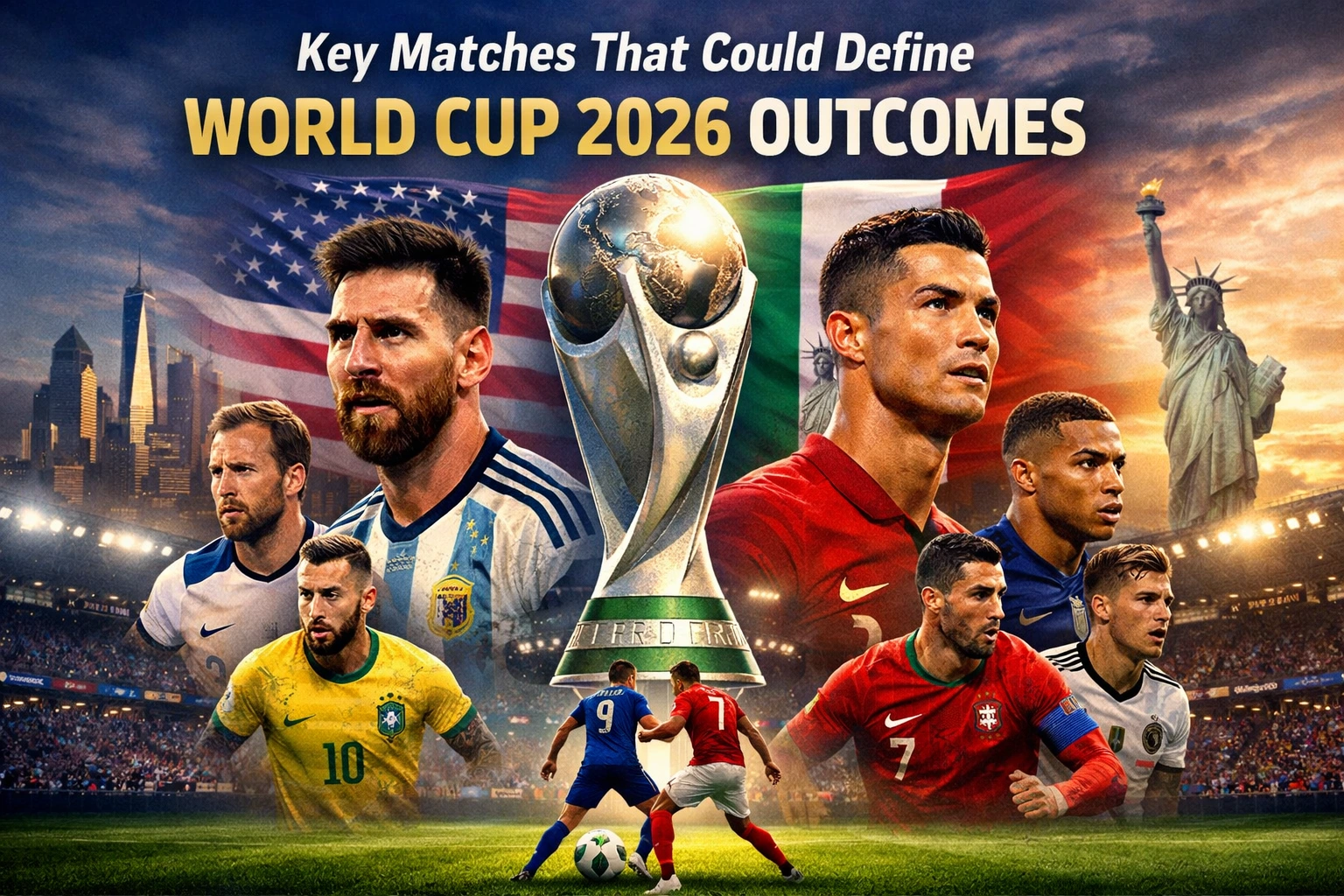
The Opening Match: Setting the Tone
It always starts with one game.
The opening match isn’t just about the result—it’s about the feeling it creates. A strong performance from a host nation can energize the entire tournament, while a disappointing one can shift expectations instantly.
With matches played across United States, Canada, and Mexico, the opening stage carries even more significance.
It sets the rhythm—not just for one team, but for the entire competition.
Early Group Stage Clashes Between Favorites
The group stage isn’t always predictable.
When two strong teams meet early, the stakes are higher than they appear. These matches often determine who controls the group and who faces a more difficult path in the knockout rounds.
A matchup involving the France national football team or the Brazil national football team early in the tournament could shift the balance of the entire bracket.
Winning these games is not just about points—it’s about positioning.
The First Big Upset
Every tournament has one.
A moment where everything stops making sense—where a favorite is outplayed, outworked, or simply outscored. It’s the match that reminds everyone that predictions only go so far.
These games often come in the group stage, when underdogs play without pressure and favorites are still finding rhythm.
And once that first upset happens, the entire tournament feels different.
Decisive Final Group Matches
Some of the most intense games happen at the end of the group stage.
This is where everything is on the line—qualification, elimination, and sometimes even reputation.
Teams like the England national football team or the Argentina national football team may find themselves needing a result to secure progression.
These matches are rarely comfortable. They’re tense, unpredictable, and often defined by a single moment.
Breakout Performances in the Knockout Stage
The knockout rounds introduce a different kind of drama.
Here, matches are no longer about strategy over time—they’re about immediate results. One mistake, one decision, one moment of brilliance can decide everything.
This is where players and teams step into the spotlight.
A match involving the Portugal national football team or the Netherlands national football team could turn into a defining moment—not just for the team, but for the tournament narrative itself.
The Semifinal Showdowns
By the time the semifinals arrive, every match feels like a final.
There are no easy games left. Every team is there for a reason, and every moment carries weight.
These matches are often tight, tactical, and emotionally charged. They are decided by small details—positioning, composure, and timing.
And more often than not, they are remembered long after the tournament ends.
The Final: One Match, One Story
Everything leads to this.
The final isn’t just about winning—it’s about defining the tournament. It’s where all the narratives come together, where expectations meet reality.
Whether it’s a clash between traditional powerhouses or an unexpected matchup, the final becomes the story that represents the entire competition.
It’s where predictions are either validated—or completely overturned.
How These Matches Shape the Tournament
Individually, each match tells a story.
But together, they shape the entire tournament.
An early result can change confidence. A knockout victory can build momentum. A single upset can alter the path for multiple teams.
That’s why focusing only on final outcomes misses the bigger picture.
The journey matters just as much as the destination.
A Broader View of Tournament Scenarios
Understanding which matches might define the tournament helps create a clearer picture of how everything could unfold.
If you want a deeper look at possible match scenarios, team progression, and evolving outcomes, you can explore match outcome predictions
to see how these key games fit into the bigger tournament structure.
Final Thoughts
The World Cup is built on moments—but it’s shaped by matches.
The ones that shift momentum, create belief, or change expectations entirely.
In 2026, there will be more games than ever—but only a few will define the story.
And when they happen, they won’t just influence the tournament.
They’ll become part of its history.